
Meat, Poultry & Seafood
Higher yields, cleaner cuts, consistent portions
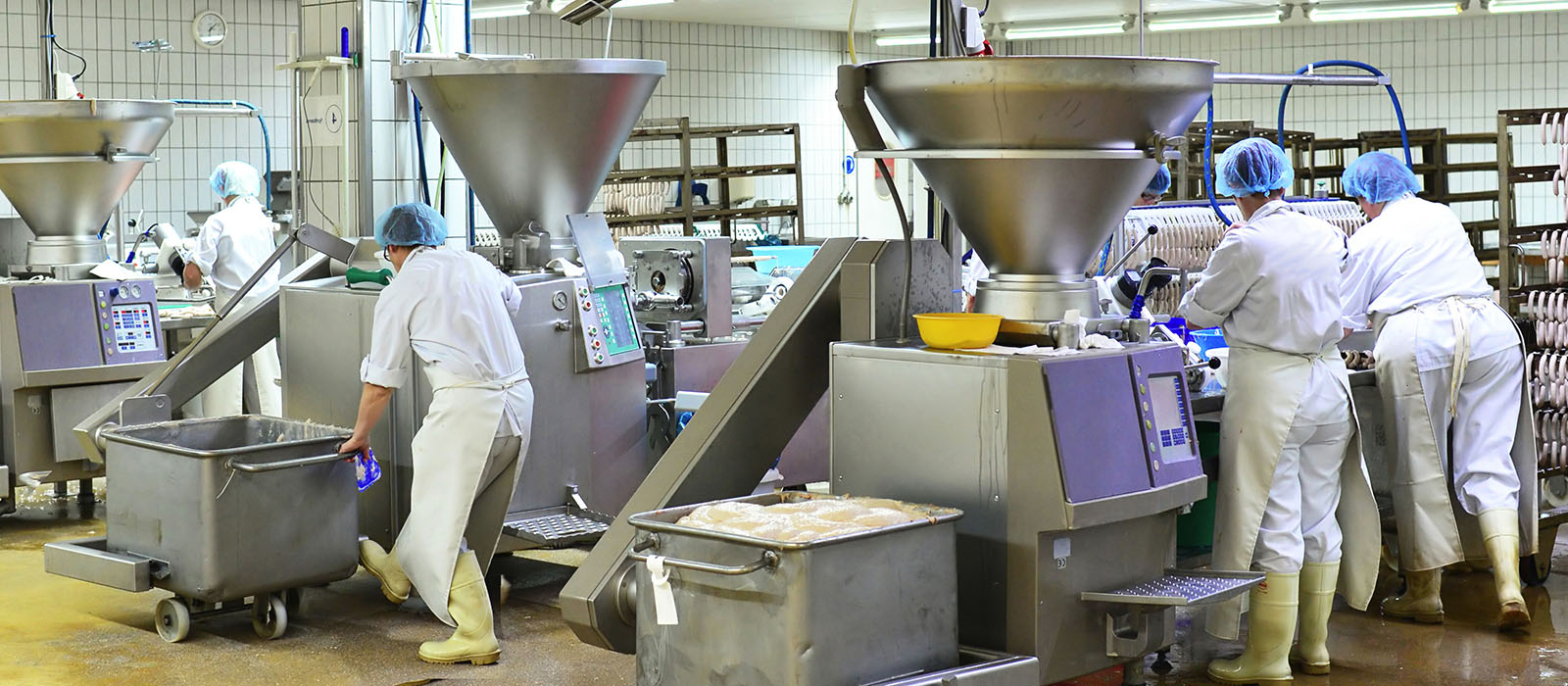
Protein processing is where a fraction of a percent in yield decides the margin. Automated cut-up and deboning lines recover more meat from every bird, vision-guided portion cutters hit target weights without giveaway, and heavy-duty grinders, cutters and mixers turn trimmings into sausages, burgers and ready products.
We cover the line from primary processing to further processing, for poultry, red meat, fish and on-board marine operations.
Processed & value-added meat
From frozen beef blocks to cooked or raw frozen patties, packed and palletised.
Step 1 of 5: Frozen block reduction
Frozen beef blocks are flaked or diced so the line can start without a long thawing step.

Step 2 of 5: Grinding & mixing
The meat is minced to the target particle size and mixed with seasoning into a uniform mass.


Step 3 of 5: Forming & portioning
The mince is shaped into patties of identical weight, diameter and thickness.

Step 4 of 5: Frying & freezing
Patties are seared or fully cooked, then frozen quickly to lock in quality.


Step 5 of 5: Packing & end of line
Frozen patties are packed, cased and palletised ready for cold-chain dispatch.


Frozen poultry turned into coated, fully cooked nuggets, frozen and bagged.
Step 1 of 7: Frozen block reduction
Frozen poultry blocks are flaked into small pieces so they can be processed straight from the freezer.
Step 2 of 7: Grinding & bowl cutting
The meat is minced, mixed with seasoning and partly chopped fine to give a mass that binds and forms well.

Step 3 of 7: Forming
The mass is moulded into nugget shapes of uniform size and weight.
Step 4 of 7: Coating & pre-frying
Each piece is battered and breaded, then briefly fried to set the coating and give it colour.


Step 5 of 7: Cooking
Nuggets pass through an oven until they reach a safe core temperature.

Step 6 of 7: Freezing
Cooked nuggets are cooled and frozen quickly to protect texture and shelf life.
Step 7 of 7: Packing & end of line
Frozen nuggets are weighed into bags, cased and palletised for cold storage.

Meat is reduced, emulsified and stuffed into casings, then smoked, cooked and packed.
Step 1 of 5: Frozen block reduction
Frozen meat blocks are flaked into pieces so the line can run without long thawing.
Step 2 of 5: Batter preparation
Meat is minced, mixed with salt and spices and chopped into a fine, stable sausage batter.

Step 3 of 5: Filling & linking
The batter is stuffed into casings under vacuum and divided into links of equal weight.


Step 4 of 5: Drying, smoking & cooking
Sausages are dried, smoked and cooked in a climate chamber for colour, flavour and food safety.

Step 5 of 5: Packing & end of line
Sausages are vacuum-packed in formed trays, then cased and palletised.

Whole muscle beef is marinated, sliced into strips and slowly dried and smoked.
Step 1 of 5: Frozen meat tempering
Frozen beef is brought to a firm, just-below-freezing state that is ideal for injecting and slicing.

Step 2 of 5: Injecting & tumbling
Marinade is injected into the meat and worked in by tumbling under vacuum for even flavour.


Step 3 of 5: Slicing
The marinated meat is cut into strips or pieces of consistent thickness so it dries evenly.


Step 4 of 5: Drying & smoking
Strips are matured, dried and smoked in a controlled climate until they reach the target water activity.
Step 5 of 5: Packing & end of line
Jerky is weighed into pouches, sealed, cased and palletised.

Ready meals & convenience food
Bones, meat and vegetables are simmered into broth, defatted, turned into soup and preserved.
Step 1 of 7: Raw material preparation
Vegetables are washed and cut, and meat is prepared, so ingredients go to the kettles ready to cook.

Step 2 of 7: Broth cooking
Ingredients simmer in water to draw out flavour, body and gelatine into a clear broth.

Step 3 of 7: Fat separation
Fat and fine particles are removed from the hot broth for a clean taste and stable product.

Step 4 of 7: Soup cooking
The broth is cooked with vegetables, meat and seasoning into finished soup.
Step 5 of 7: Filling & sealing
Soup is dosed into cups or pouches and sealed while hot.

Step 6 of 7: Pasteurising & chilling
Sealed packs are pasteurised, then chilled or frozen depending on the target shelf life.

Step 7 of 7: Packing & end of line
Packs are cased and palletised for chilled or frozen distribution.
Meal components are cooked, combined, portioned into trays and preserved by cold or heat.
Step 1 of 6: Raw material preparation
Vegetables, meat and fish are cleaned and cut to size so each component cooks evenly.
Step 2 of 6: Cooking, frying & roasting
Components are boiled, fried or roasted separately to get the right texture and colour for each.
Step 3 of 6: Mixing
Cooked components are combined with sauces in an agitated kettle without damaging them.
Step 4 of 6: Tray filling & sealing
Meals are portioned into single or multi-compartment trays and sealed with a lidding film.


Step 5 of 6: Preservation
Sealed trays are chilled, frozen, pasteurised or retorted according to the required shelf life.

Step 6 of 6: Packing & end of line
Trays are sleeved or cartoned, cased and palletised for dispatch.

Ingredients are cooked into dips and sauces, filled into cups and preserved in the pack.
Step 1 of 5: Raw material preparation
Vegetables and other ingredients are cleaned, cut and weighed ready for cooking.
Step 2 of 5: Mixing & cooking
Ingredients are blended and cooked in an agitated kettle into a smooth or chunky dip.
Step 3 of 5: Filling & sealing
The product is dosed into cups or tubs and sealed.
Step 4 of 5: Pasteurising & chilling
Filled cups are pasteurised in the pack and then chilled or frozen to hold quality.

Step 5 of 5: Packing & end of line
Cups are grouped, cased and palletised for distribution.
Cooked meals are frozen and dried under vacuum into light, shelf-stable pouches.
Step 1 of 6: Raw material preparation
Ingredients are cleaned, cut and portioned so they cook and dry evenly.
Step 2 of 6: Cooking, frying & roasting
Components are cooked into a finished meal before any water is removed.
Step 3 of 6: Tray filling
The meal is spread in an even layer on trays so it freezes and dries uniformly.

Step 4 of 6: Blast freezing
Loaded trays are frozen fast to form small ice crystals that protect texture.

Step 5 of 6: Freeze drying
Ice is removed by sublimation under vacuum, leaving a light product that rehydrates quickly.

Step 6 of 6: Packing & end of line
Dried meals are sealed in barrier pouches with low oxygen, then cased and palletised.
Pet food
Meat and cereals are combined, extruded into kibble, dried, coated and bagged.
Step 1 of 7: Cereal preparation
Cereals are milled and dosed so the dry part of the recipe joins the meat at the right ratio.


Step 2 of 7: Meat preparation
Frozen meat blocks are flaked into pieces ready for grinding.
Step 3 of 7: Grinding & emulsifying
Meat is ground and emulsified, then combined with the cereal part into a uniform mix.
Step 4 of 7: Extrusion
The mix is cooked under pressure and shaped into kibble at the die.

Step 5 of 7: Drying
Kibble is dried to a low moisture level for a long, stable shelf life.

Step 6 of 7: Coating
Fats, oils and palatants are sprayed onto the kibble for taste and energy.

Step 7 of 7: Bagging & palletising
Kibble is weighed into bags, sealed and stacked onto pallets.

A meat and cereal emulsion is extruded into strands, cooked, dried and cut into sticks.
Step 1 of 9: Meat preparation
Frozen meat is reduced to small pieces ready for mixing.
Step 2 of 9: Cereal preparation
Cereals and dry ingredients are weighed and dosed into the mixer.
Step 3 of 9: Mixing
Meat and dry ingredients are blended into an even mass.
Step 4 of 9: Emulsifying
The mass is reduced to a fine emulsion that extrudes cleanly and holds its shape.
Step 5 of 9: Extruding
The emulsion is pushed through dies into continuous strands or shaped profiles.

Step 6 of 9: Cooking & drying
Strands are set with steam, cooked and dried to the target texture and moisture.

Step 7 of 9: Cooling
Product is cooled so it firms up and can be cut cleanly.
Step 8 of 9: Cutting
Strands are cut into sticks or treats of set length.

Step 9 of 9: Packing & end of line
Treats are packed in bags or flow-wraps, then cased and palletised.
Meat emulsion is formed into cooked chunks and canned with gravy for a sterile wet food.
Step 1 of 8: Meat preparation
Frozen meat is flaked and ground into pieces ready for mixing.
Step 2 of 8: Dry ingredients
Cereals, vitamins and minerals are weighed and fed into the mixer.
Step 3 of 8: Mixing
Meat and dry ingredients are blended into a uniform mass.
Step 4 of 8: Emulsifying
The mix is turned into a fine emulsion that sets into firm chunks.
Step 5 of 8: Extruding & cooking
The emulsion is extruded and set with steam, then cut into meat-like chunks.
Step 6 of 8: Cooling
Chunks are cooled so they keep their shape during filling.

Step 7 of 8: Gravy preparation
Gravy or jelly is cooked separately and dosed over the chunks in each can.
Step 8 of 8: Canning & end of line
Cans are filled with chunks and gravy, seamed, sterilised and packed for dispatch.


Plant protein
Plant protein is texturised into fibrous chunks, marinated, cooked, chilled and packed.
Step 1 of 5: Protein handling
Dry plant protein is discharged from bags, conveyed and dosed to the extruder.


Step 2 of 5: Extrusion & dicing
Protein is cooked under pressure and cooled in a long die to form meat-like fibres, then cut into chunks.

Step 3 of 5: Marinating & cooking
Chunks absorb marinade by vacuum tumbling and are then cooked for flavour and bite.
Step 4 of 5: Chilling & freezing
Product is chilled or frozen quickly to keep it stable for storage.
Step 5 of 5: Packing & end of line
Chunks are packed, cased and palletised for chilled or frozen distribution.
Where it is used
- Poultry cut-up & deboning
- Fixed-weight portioning
- Grading & batching
- Burgers & minced meat
- Sausages & emulsions
- Frozen block processing
- Fish fillets & marine grading
- Cutting tools & saw blades
What we supply for meat, poultry & seafood
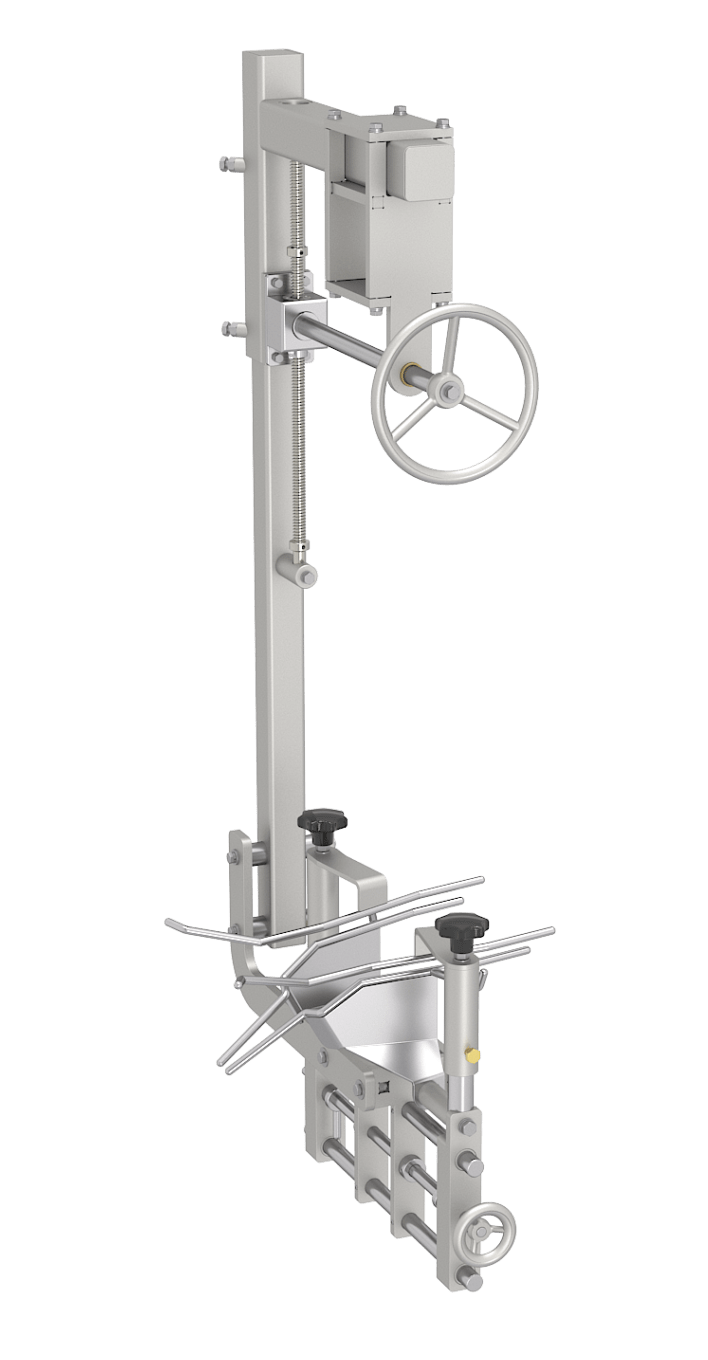 Cut-up Modules
Cut-up systems
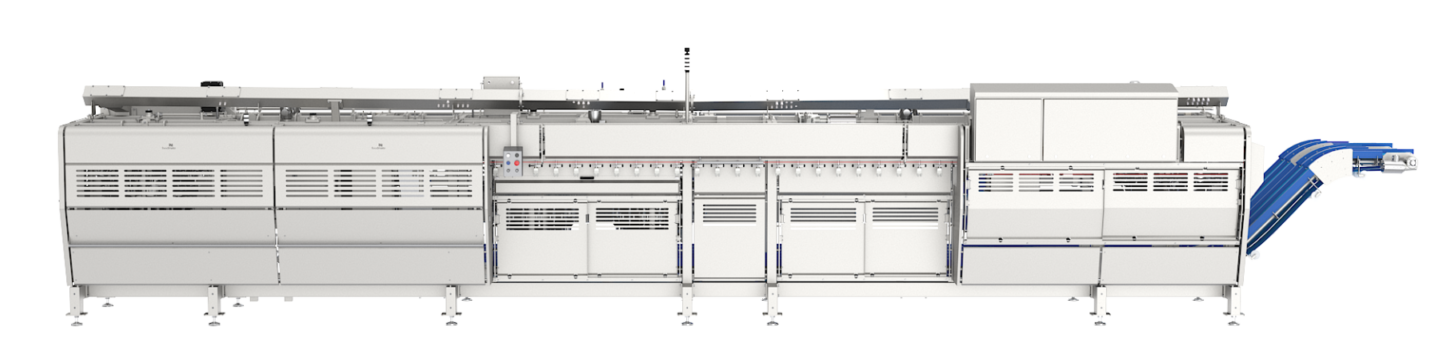 Dark Meat Deboning Systems
Deboners
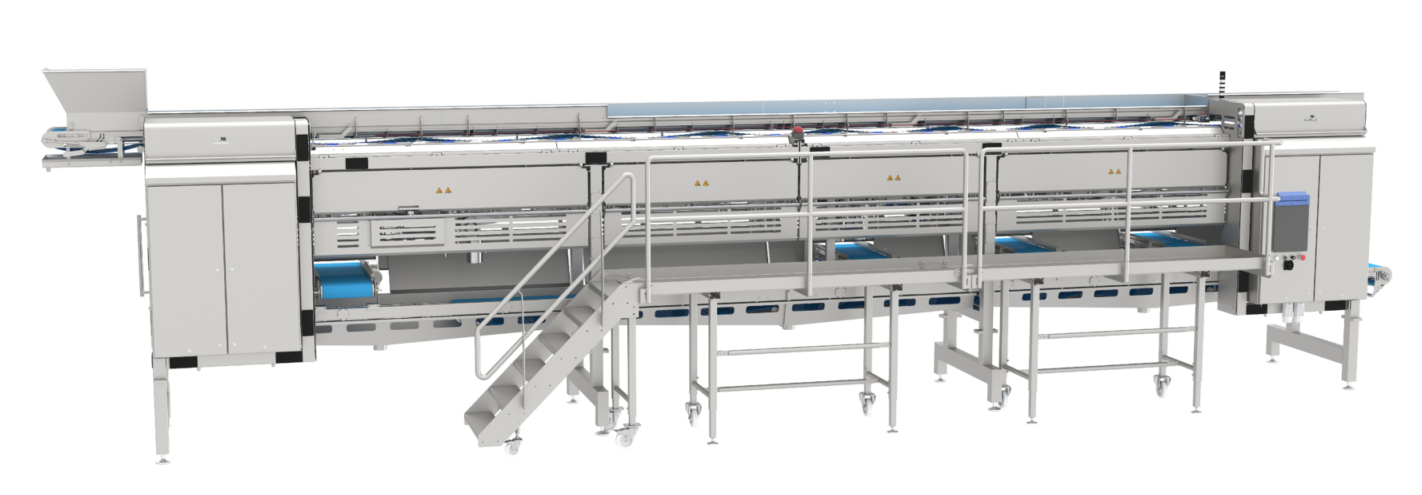 White Meat Deboning Systems
Deboners
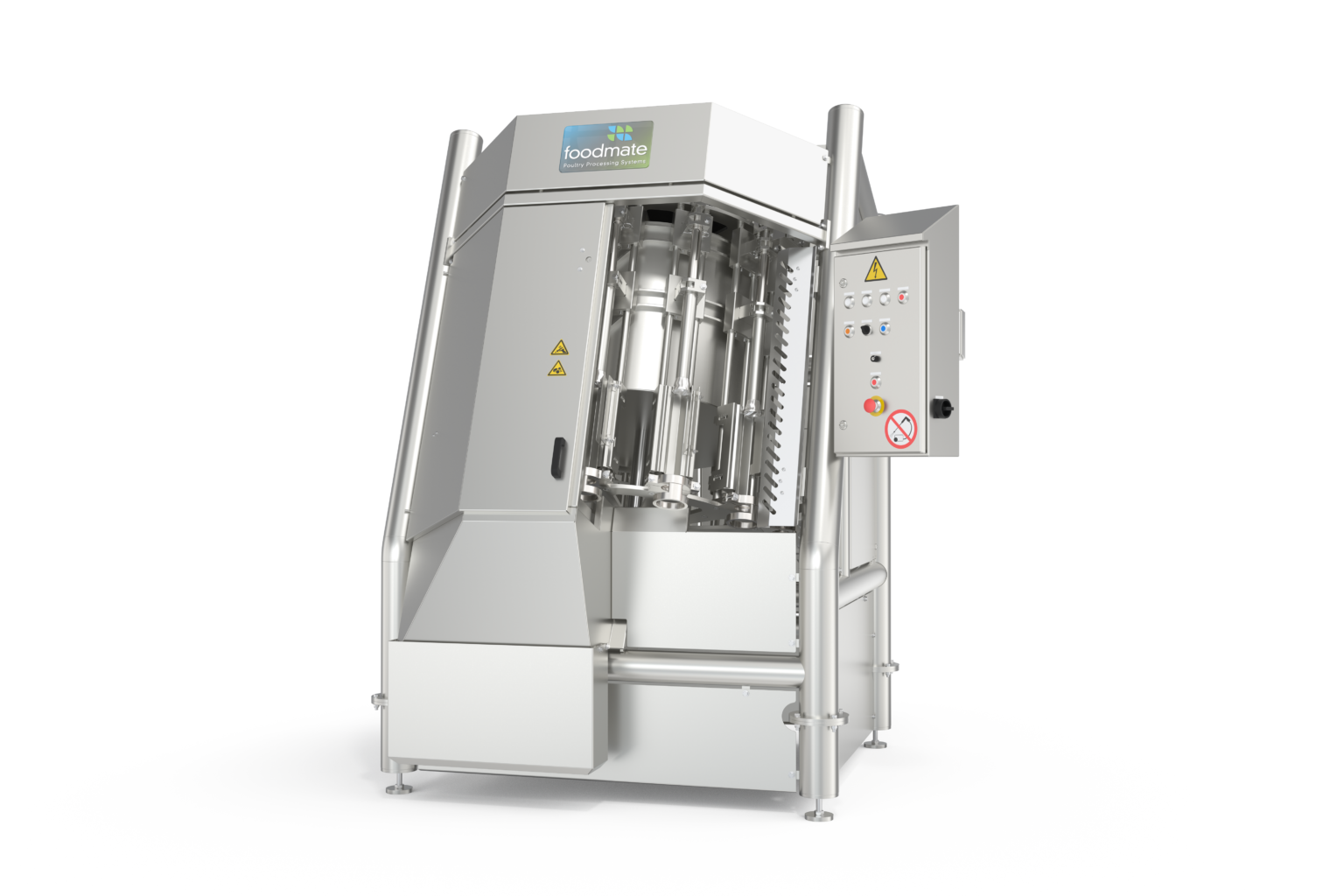 Turkey Deboner
Deboners
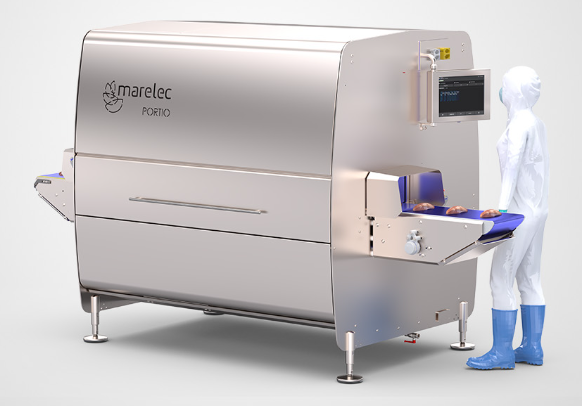 Poultry Portioning & Grading
Portion cutters & graders
Meat Portioning & Grading
Portion cutters & graders
Fish Portioning & Grading
Portion cutters & graders
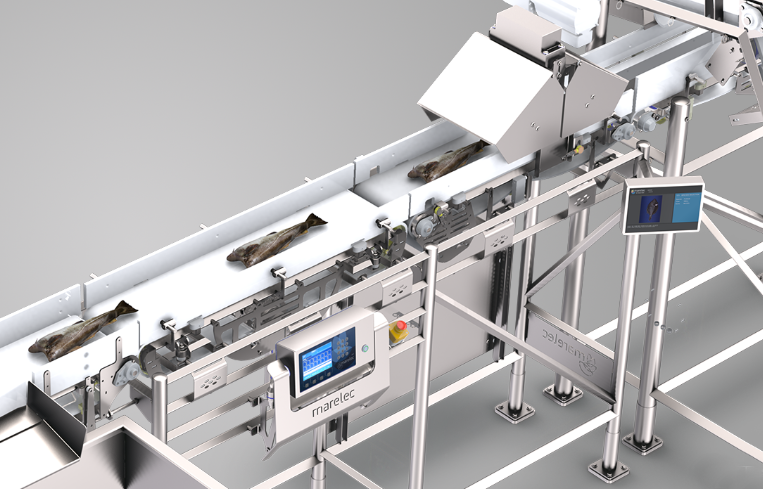 Marine Grading & Batching
Marine graders
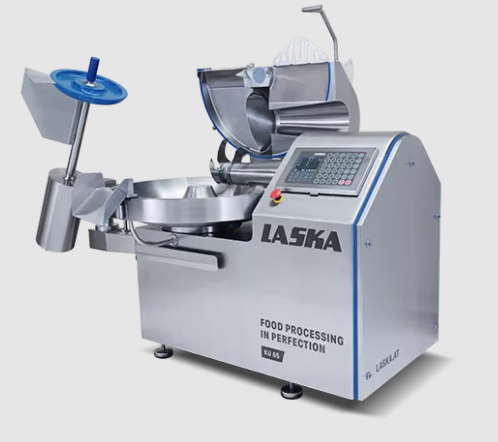 Cutters
Bowl cutters
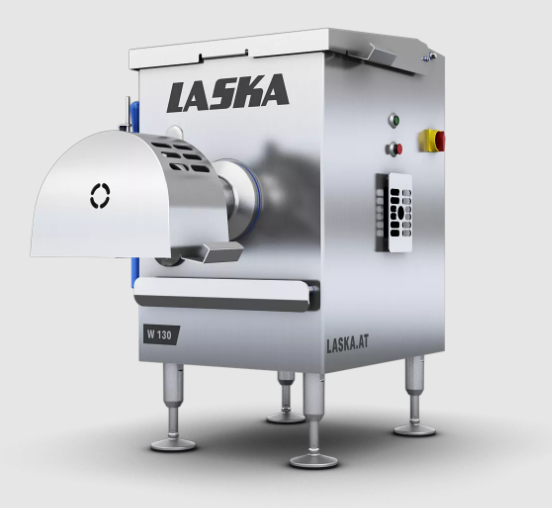 Grinders
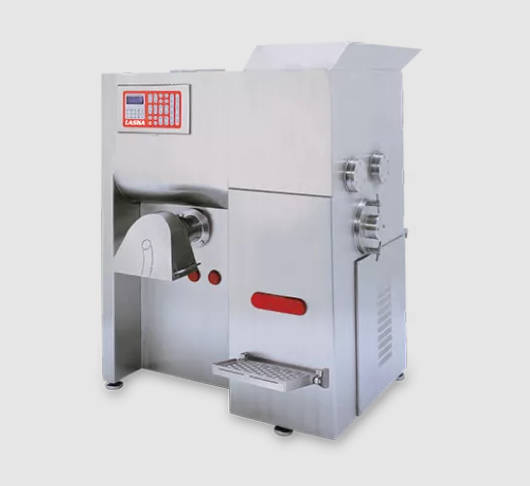 Mixer-Grinders
Mixer-grinders
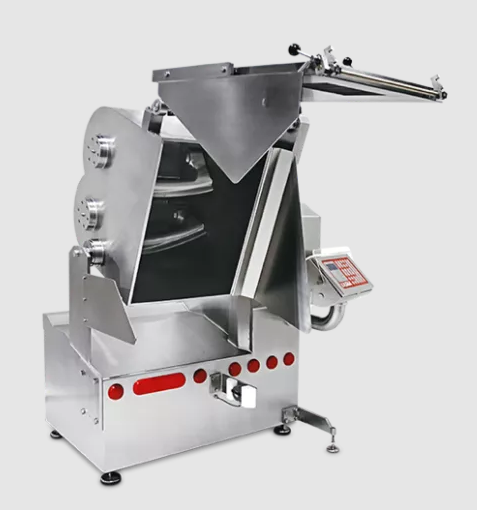 Mixers
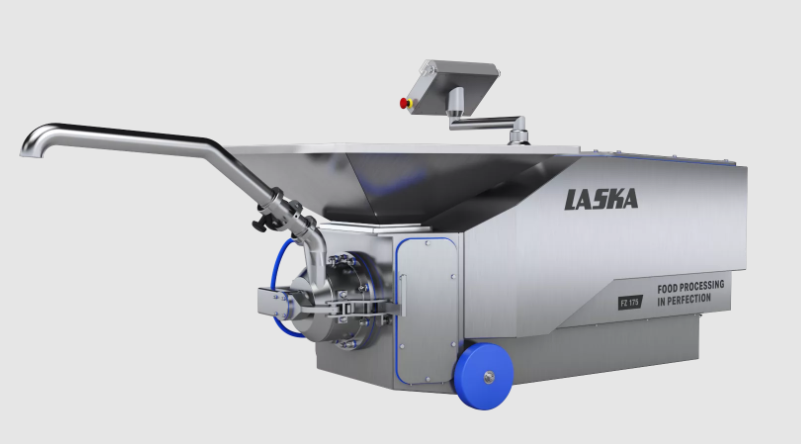 Emulsifiers
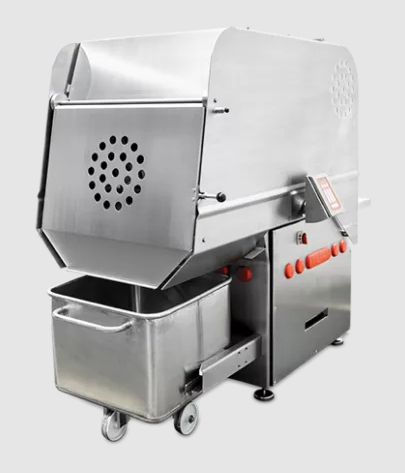 Frozen Meat Cutters
Frozen meat cutters
 Knives
Cutter & slicing knives
 Saws
Band saw blades
Related segments
Planning a new line?
Tell us about your product, capacity and timeline. Our team will come back with options from the manufacturers we work with.
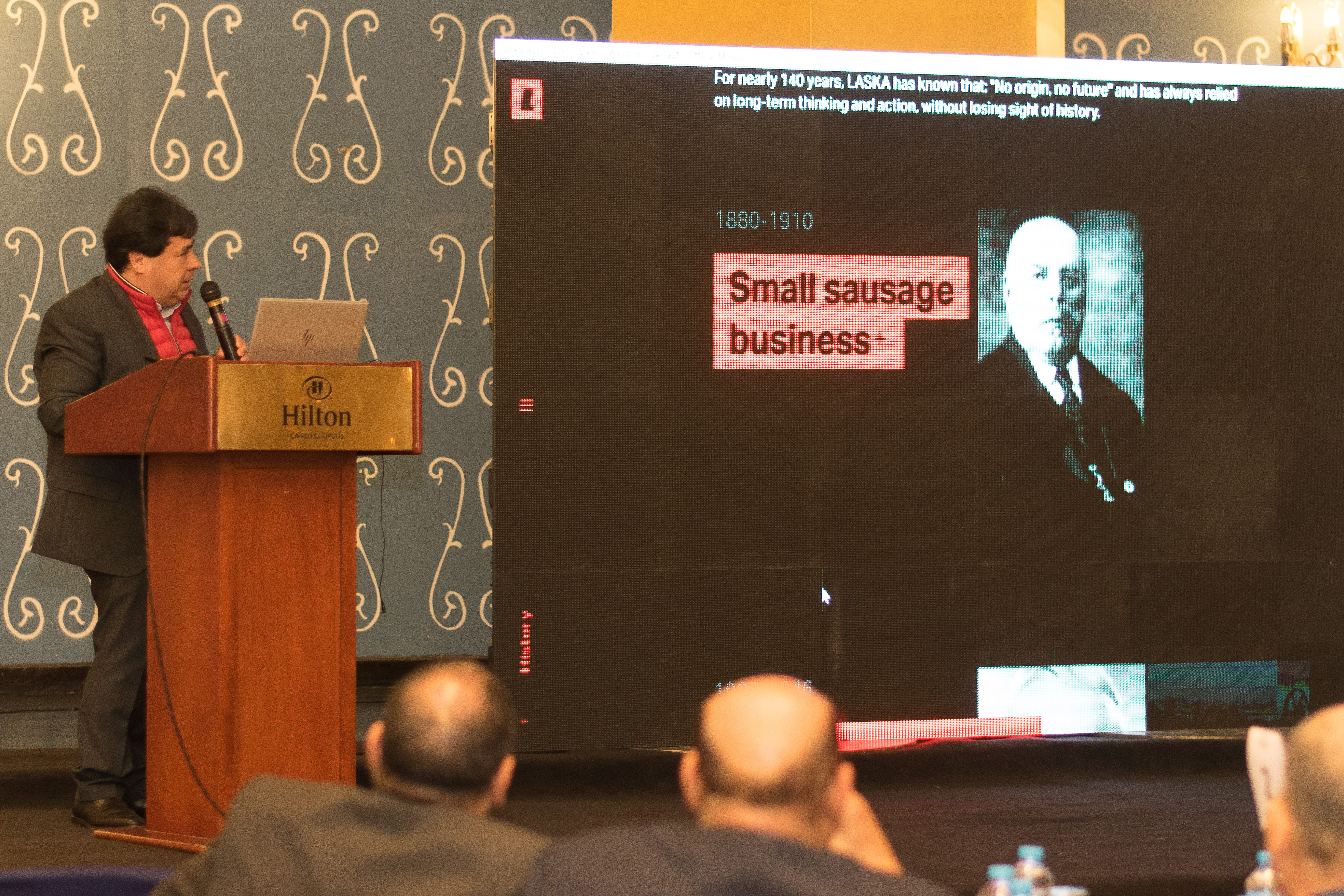


Sagueny Group Seminar
Manufacturers and industry experts under one roof: production lines, meat and poultry processing, packaging and quality control.
See the event